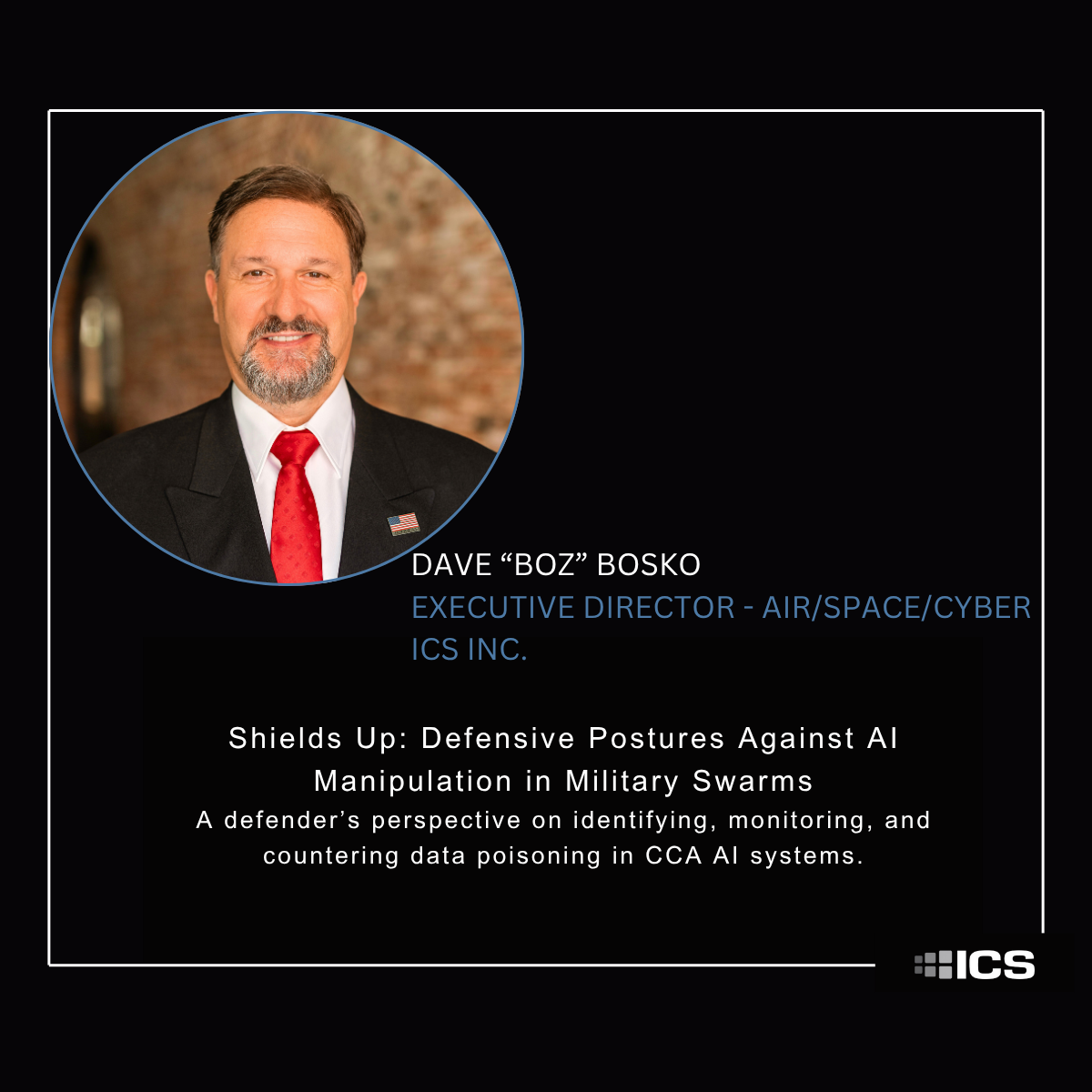

A defender’s perspective on identifying, monitoring, and countering data poisoning in CCA AI systems.
Perspective: Defensive Cybersecurity Operations
Introduction
As the US Air Force’s Collaborative Combat Aircraft (CCA) program integrates advanced AI into networked swarms, defending these systems from manipulation is as vital as any physical armor. With adversaries actively exploring ways to poison data and deploy adversarial attacks, the focus must shift from reactive patching to proactive, AI-specific defense-in-depth.
The Defense Challenge: Layered Protection for AI Swarms
Securing distributed AI in military platforms like CCA demands far more than traditional cybersecurity. The CCA’s autonomy and agility hinge on complex algorithms trained on enormous data sets, making them uniquely vulnerable to sophisticated, stealthy forms of subversion. The goal: detect, contain, and recover from data poisoning and/or adversarial tactics before they can disrupt missions.
Detection and Monitoring
· Anomaly Detection: Implement continuous monitoring for unusual patterns in input data or AI decision outputs. Sudden deviations may indicate a poisoned model or adversarial input.
· Explainable AI (XAI): Leverage tools that reveal why an AI made a decision, enabling operators and analysts to spot manipulation or logic errors that might otherwise be invisible.
· AI-Driven Red Teaming: Regularly stress-test systems with simulated attacks to expose and close potential loopholes before real adversaries exploit them.
Hardening and Oversight
· Adversarial Training: Routinely expose models to crafted attacks during training to build resilience, teaching AI to recognize and ignore poisoned or adversarial data.
· Model Robustness: Use robust architectures and ensemble methods that make it harder for a single corrupted input to trigger systemic failure.
· Human-Machine Teaming: Maintain “human-on-the-loop” protocols; operators must be empowered to review, override, or halt AI-driven actions at the first sign of an anomaly.
Real-World Lessons
· Lessons from DoD red-team exercises have shown that even the best AI models can be tricked or degraded by adversarial inputs, but layered detection and oversight can catch attacks early.
· Routine cyber hygiene for AI: patch models, monitor for drift, and rigorously vet all training data sources.
· Zero trust precepts: how do you know the data sources are legitimately blue? ZT is constantly improving; therefore, incorporation must be constant.
Conclusion
AI-powered CCAs are the new front lines in the battle for information dominance. The key to resilience is not a single defense, but a flexible, layered posture combining continuous anomaly detection, explainable oversight, adversarial hardening, and empowered operators. With adversaries innovating as fast as our technologists, proactive and adaptive defenses are essential to keep America’s AI edge secure.